

Terra de encantos
On summer and Spain and schizophrenia


2-in-1
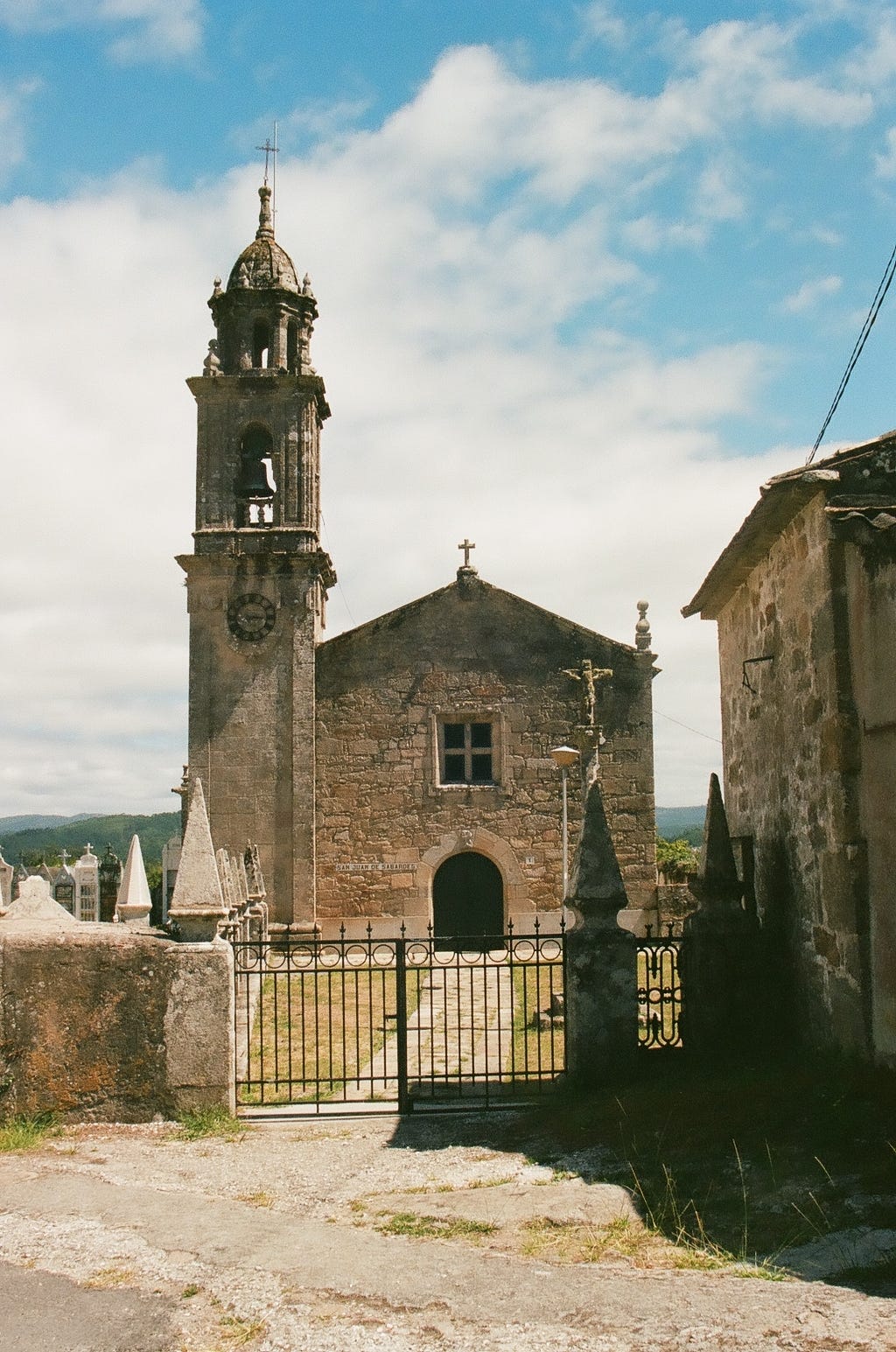
The people here have crooked noses and straight faces. The elders have leathery skin and their hands shake like lilies. The closer you look the less you’ll find. Distance is custom. Galicians don’t go to church, they listen to the bells from afar because they know they’re closer to God this way. There’s a dolphin who swims alone in the harbor. I am a girl who swims alone in the bathtub. 2-in-1 shampoo, Johnson’s baby wash, and a rubber octopus. Grandmother has already bathed me four times today, but I am still unclean. I am impure, unwashed, a nuisance. I sip on the sweet strawberry bathwater when she leaves the room. The window is open and I can hear the sounds of Esteiro below. The bagpipes, the seagulls, the livestock dogs, the church bells, the murmuring ocean, the rustle of the eucalyptus trees, the crowing rooster, it’s all too calm. The apartment is quiet. Grandfather’s checking his insulin in the bedroom, mother’s making tortilla in the kitchen, father’s sipping on vodka in the living room, brother’s playing with toys in the hallway. No one is talking, not even me to my octopus. After I’ve been sufficiently scrubbed, my stomach full of suds, Grandmother dresses me in a cotton white dress and espadrilles. Grandfather scoops me up and we walk across town to Maria’s house. Mother says she is dying of cancer. This might be my last chance to say goodbye. She says this every year, yet Maria is always still alive. She’s immobile, but she always gives me lots of sweets. I can’t understand a word Maria says because she has no teeth and I don’t speak Galego. The women of Esteiro are strong and sturdy like the cattle they rear, so maybe she will live forever.
Spanish Honey
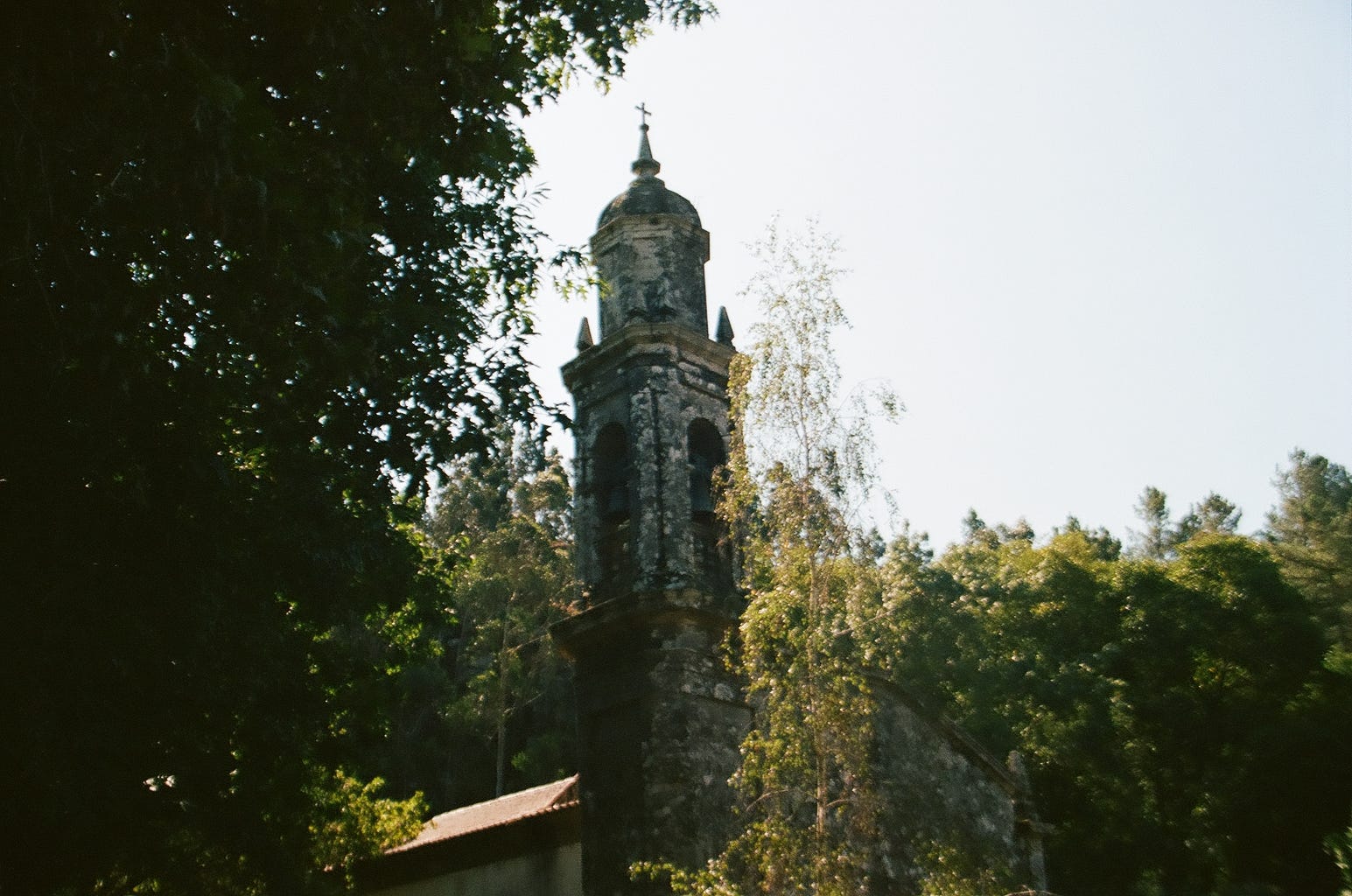
Every member of my family is buried in this cemetery, and they all have the same name. Manuel Vara, Manuela Vara, Manuel Vara, Manuela Vara. Their birth and death dates are the only distinguishing features, I think it’s a communist thing. I’m here to visit my grandfather’s grave because it’s the right thing to do. The church is located in a small fishing village, O Freixo, on the other side of the mountain. Founded in 1102 by the Benedictine monks, it appears quaint and picturesque. Outside the gate is a small basin of potable water and a placard to commemorate its impressive historicity. Grandfather isn’t actually buried, but rather his ashes are above the ground in a mausoleum. They ran out of subterranean space after the War. The Franquistas killed all the men except for him, Manuel Vara, the one born in 1938. Just a few paces away lies his father, the Manuel Vara who died in 1938. They brutally murdered him, his body never recovered, yet a gravestone stands in his name. An empty coffin lies under the soil. An empty gesture to symbolize the empty promise of his return. Last year, visiting O Freixo, I replaced Grandfather’s roses, straightened the crooked crucifix, quickly whispered a prayer under my breath, and drove off. Winding down the dirt mountain paths, the scenery was disquieting. The eucalyptus forest hissed with its grotesque green faces, the sand on the beach was sharp and severe, the rooster wouldn’t stop crowing. The Benedictine monks had placed a curse on me. Some kind of intra- generational chthonic curse that had finally caught up to me after the halcyon days. In my neurasthenic state, I fled to the monastery in Outes to bathe in the hallowed falls. My yearning for purity proved fruitless, for when I arrived, I stumbled upon a group of typical Galician Bohemian nomads bathing nude. Except these kids weren’t like the rest. The group bore an uncanny resemblance to the cast of American Honey (2016) and they looked phantasmic the way the rays of sun cut through the misty air, illuminating their dirty rugged skin. Transfixed in their gaze, they were telling me to join their beatnik squad. I could ride around with them and listen to Rae Sremmurd and make crystal jewelry all day long, but I began to feel entropic and heavy, so I fled and projectile vomited into a cornfield out the car window. The following day, I saw the nomads again at Praia Boca do Rio, this time they were semi-clothed, adorned with stained string bikinis and tattered swim trunks. None of them seemed to own shoes. I snapped a picture of them to prove they were real people, real Bohemian people. Hiding behind a rock in the tidal pools, I scribbled down a bunch of Kerouacian gibberish about schizoanarchism and radical rural depopulation and these messianic American Honey, no, SPANISH HONEY people who were going to bring me Salvation. I considered hopping into their red Volkswagen van and leaving my normal non-blessed life behind to become a beautiful tantric rural Galician eschatological nomad princess, but I didn’t. I just went home and poured myself a heaping serving of chilled Absolut Vodka into a pink plastic cup. Sitting on the kitchen counter, sipping on my prophylactic, I watched my neighbor trim her weed plants as the sun set. It was one of those vibrant pinky orange sunsets, mocking me with its beauty. It told me that actually the world is mysterious and worth traversing, and probably even worth traversing with some nomads who do ayahuasca, but you chose the safe path: Absolut Vodka. Disgusting, but what else am I supposed to do alone in rural Spain? The answer to that is obviously to pray and confess and write about beautiful things and talk to beautiful people, but I did none of that because the Benedictine monks cursed me and left me with an ugly soul.
Iago
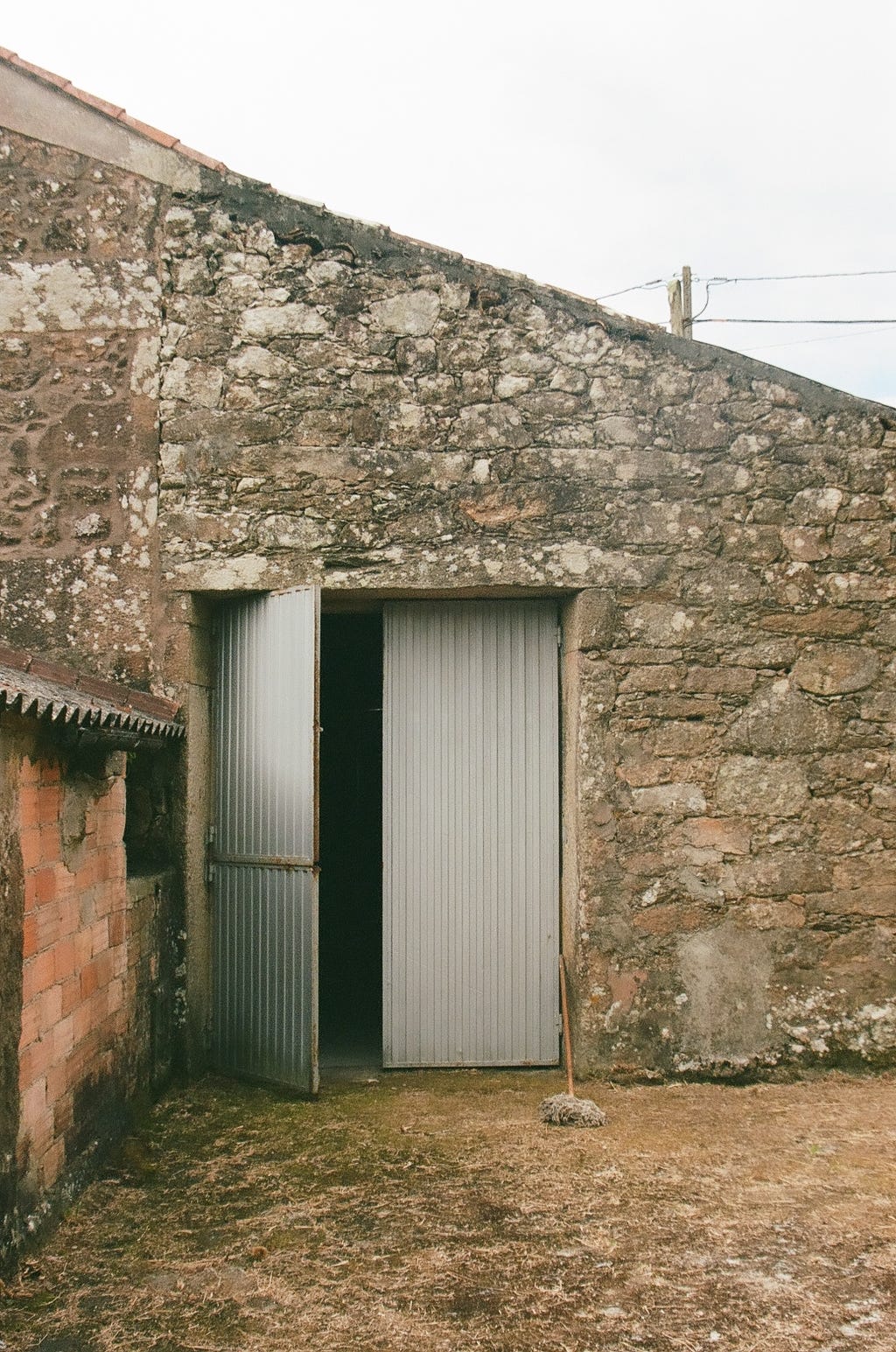
The year after the SPANISH HONEY disaster (¿or revelation?), I met my savior. A 36-year-old high school history teacher who literally makes Spanish honey. He is a nomad-adjacent beekeeper; sometimes he sleeps in his car, other times in the forest, and occasionally in his house up on the mountain. Iago does LSD in Northern California and gives great advice. He knows everything about the War and Galicia and the bees. We hang out at this bar, Modus Vivendi, that has low ceilings and a display case full of pornographic photos, guns, and foreign currency. On these warm nights, we come here to sit outside and drink Estrella Galicia and get sappy and existential. Iago calls me riquiña — a mix between cute and nice — you’re like a sister to me. We come from the same land. A terra meiga, a terra de encantos. An enchanted land, and to this land we shall return. He protects me from the monks, he kills invasive wasps with his bare hands, Iago would do anything for that SPANISH HONEY. One evening, after a big Galician dinner and many shots of cream liquor, the restaurant lights dim, and he makes his way to the front. There’s a large cauldron full of herbal alcohol, clovers, and bay leaves. Setting the cauldron ablaze, he pulls out his Android and begins reciting a spell in Galego, stirring the flames. His voice sounds sinister, but he has the biggest childlike smile on his face. He pours me some of his blessed liquor. The concoction is sickeningly sweet. Iago approaches slowly with his hands behind his back and a wide grin on his face. Iago never stopped smiling. He hands me a brown paper parcel. It’s a gift, he says. My eyes begin to swell with tears. Inside is a large Estreleira flag. White flag, blue stripe, red star. Para a miña irmá. My sobs stain the shoulder of his gray t-shirt. It smells like freedom, like a free Galicia. This was the Last Judgment I had been waiting for. I don’t know if Iago’s a witch or wizard or sorcerer or eudaemonistic disciple or just a beekeeper with a mystical sensibility, but what I do know is that he is pure unadulterated Good.
PURE SPANISH HONEY.
Tata
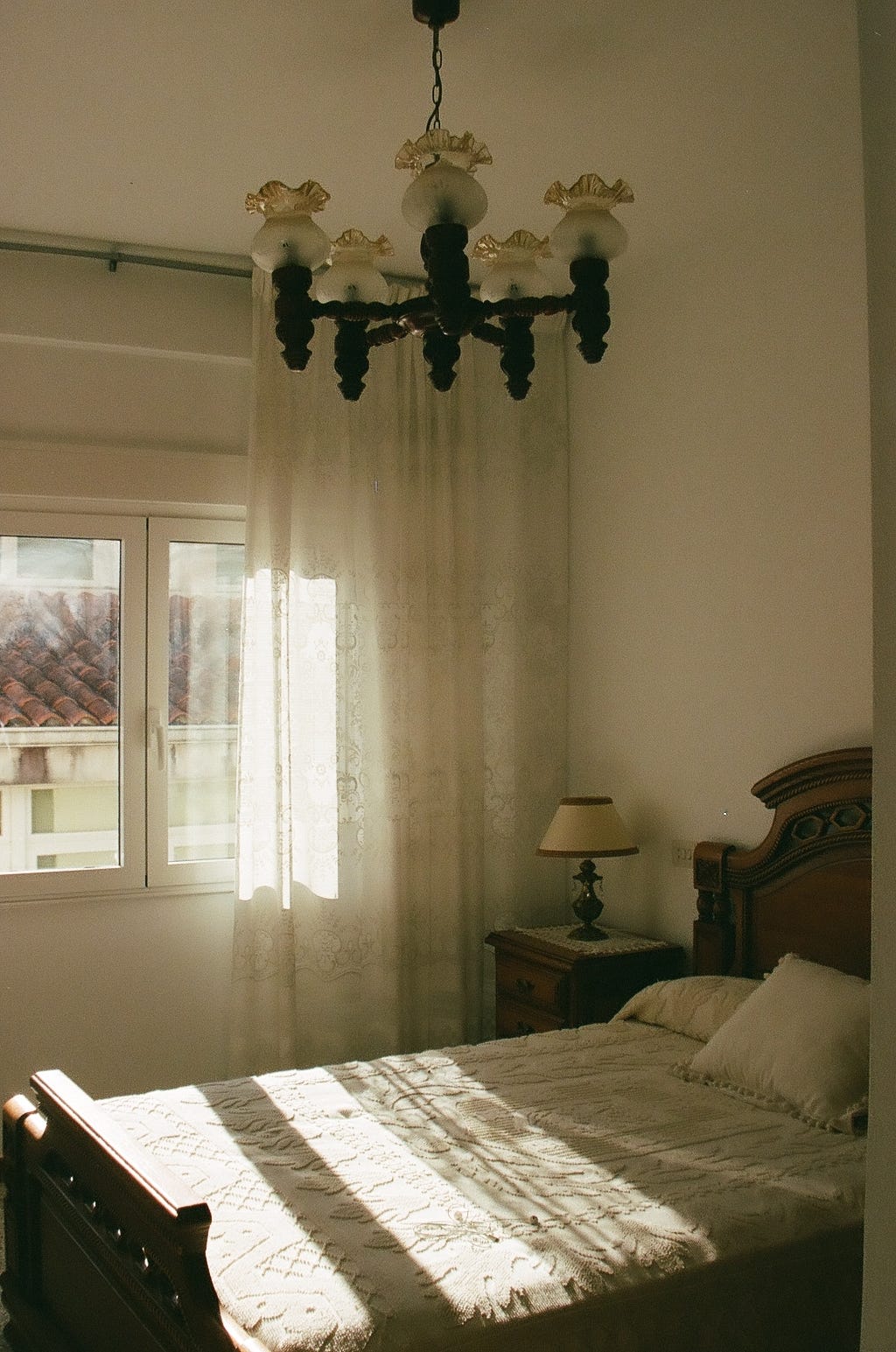
I showed up at her doorstep with two overweight suitcases and a jar of Iago’s honey. I knew she was a witch from the moment I laid eyes on her. A true Galician witch. A bruxa. A 73-year-old Galician fascist interior decorator. Her grandfather killed my great-grandfather, and now we live together. She has dementia and I take care of her. In return, I receive a bed to sleep on, gazpacho, chocolates, and some great stories. Oftentimes I can’t leave or enter the apartment because she confiscates my keys. I’m like Rapunzel, except my hair is brittle because I use the 2-in-1 shampoo she left for me in the shower, and Tata probably doesn’t want me around here anyway. At supper, she doesn’t eat and doesn’t let me speak. Tata hates it when I speak. She much prefers to recount the same few stories over and over again until she’s too tired to continue. The story about her pet duck, the story about interior design school, the story about the bar on Calle de Princesa, the story about her husband’s death, the story about her second husband’s death, the story about her infertility, the story about her gay adopted son, the story about how Franco had a crush on her aunt in grade school, and so on. Living with her is cruel and unusual punishment. My life is homogenous. She’s not sweet, and neither am I. Tata can’t remember my name or what I’m doing here or if I went out last night, but she can remember that I’m Galician.
missing Iago rn